Wednesday, November 9, 2011
Serendipity
Serendipity has drawn my attention for a fairly long time now. The first time I heard this word was in the 2001 movie, "Serendipity" with John Cusack and Kate Beckinsale, which enchanted me and made me wondered what the definition for the word truly was. Sadly, I never really bothered to look the definition up and learn what the concrete, scholar definition for the word was. As of now, I only the definition from the movie, "A fortunate accident" which is more than enough of a definition for me to fall in love with the word. The word itself isn't used in the everyday language as much I wish it did, but the great thing about the word is that most people know it, and for dreamers like me, it's a word that we hope to use in our language, our discoveries, or simply or opening of our hearts. Recently I've heard the word more commonly used in TV shows, like Disney's "Phineas and Ferb" where the characters seem to put themselves in strange situations and later realizing how serendipitous their situation is. I want to learn why, this word was invented and how it is that it came to be common in the English usage, as well as how someone thought of putting the its letters together to create this word that just flows as you say it, and causes more interest for its beautiful sound alone.

Tuesday, November 1, 2011
Coming Unstrung: Women, Men, Narrative, and Principles of Pleasure- Susan Winnet
1. Focuses on the idea that books should parallel that of a sexual experience
2. Works on deconstructing the idea of biased in the sense that a female prespective is so different from a male perspective.
3. No point of view is better than the other, male or female, they each provide a very peculiar way. One story told by a male and one by a women can be so different with the emphasis on what each finds the most important
4. How good a book is, is greatly dependent on how involved the reader is in the novel
5. The way males and females present their climax, or story plot is very different because they choose to focus on other things, each prioritizing certain details
2. Works on deconstructing the idea of biased in the sense that a female prespective is so different from a male perspective.
3. No point of view is better than the other, male or female, they each provide a very peculiar way. One story told by a male and one by a women can be so different with the emphasis on what each finds the most important
4. How good a book is, is greatly dependent on how involved the reader is in the novel
5. The way males and females present their climax, or story plot is very different because they choose to focus on other things, each prioritizing certain details
Sunday, October 2, 2011
Glorious Knights
Throughout time, there has been an amazing selection of stories about knights, but never before has there ever been a comparison done between a knight from the round table to the Dark Knight. Many knights have many things in common, such as their values and their honor, which is what always makes a knight, well a knight. “Sir Gawain and the Green Knight” and “The Dark Knight” are more relatable than most people think, as Sir Gawain and Batman share several of the same characteristics, they’re both loyal, brave, and perfectionists.
The Dark Knight or the famous Batman is one of the most popular heroes in common time because of his amazing sense of justice and his want to maintain peace in the world. Today, there is no one person that doesn’t know of Batman and regardless of the person that is asked about him, one thing is always in their descriptions of him, Batman is brave and a good person. Batman is a very important character in this 21st century because he is a hero and he is well admired, but he holds no super powers, only the power that he exhorts by being the good person that he is, which his most important characteristic. He is the most relatable hero because he has no super powers, only his will to defend the innocent of help make this world a better place; nothing far from any child’s dream. This is a typical characteristic of what a knight is, honorable, loyal, brave, and good-hearted. Being so great can only lead to compare him to one of the greatest knights from another time, Sir Gawain, as both Batman and Sir Gawain fall into their own category.
Sir Gawain, form “Sir Gawain and the Green Knight” is one of the most remembered knights from the Anglo-Saxon time period. Sir Gawain has an amazing sense of right and wrong and regardless of the challenges he faces, he is always trying his hardest to remain loyal and rightful. Sir Gawain, like the Dark Knight, is a good person, and because he is a good person, he has been popular among the literature books. In the time that his story was published or told, he was a very respected knight and clearly he was the character that was idiolized by kids, just like Batman. “Sir Gawain and the Green Knight” is not only an amazing story of the adventure by Sir Gawain but it is also a great tale of the rewards that can be found by being good. The knight in this story shows that even through the temptation of wrongs, a person can make up for not always being perfect and that perfection isn’t always a good thing. Out of the many critics that look at Sir Gawain, he himself, is his greatest critic which although doesn’t seem like it would be a great issue, at the end it becomes evident that being a perfectionist or expecting perfection from himself is one of the worst things that he can do to himself. Sir Gawain goes through an emotional battle with himself for not having been perfect and one-hundred percent loyal, but in reality, he should never beat himself up for a small mistake that any person could have committed. If instead of beating himself up for not being perfect he took what he had done, analyzed it, and made it into a positive criticism, he would be more aware that although he isn’t perfect, he would become an even better person. This is the greatest issue that Sir Gawain shares with Batman, trying to be perfect is not always the best thing.
Looking through history the greatest heroes, have never been perfect so Sir Gawain and Batman should not force or expect themselves to be perfect. As good as perfection can be, going to extremes on perfection can be the greatest damnation that they put themselves through. Many see perfection as the goal that everybody should share, but no human being is perfect and without perfection, there’s room for improvement and even the smartest and wisest person knows that no one knows everything. Psychologically, when these two characters held themselves through such high expectations, leads to a great deal of, perhaps deception which leads them through a path that would be hard for them to go through. Being perfect caused both Sir Gawain and Batman to block them from father growth, without this obsessive need for perfection, it would be much easier for them to find a way to improve themselves, not only as heroes but as people in general.
As simple as this comparison is, one great lesson can be learned when analyzing both of these incredible characters, perfection is never necessary because without perfection, theirs is always room for growth.
Tuesday, September 27, 2011
Alfred the Great
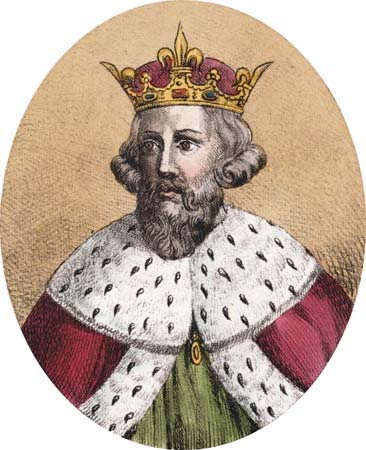
Alfred the Great is a significant character in the Anglo-Saxon history and in the history of the English speaking people as he was the least expected leader and was able to sustain his people and his country pretty well. Alfred was baptized by Pope Leo IV which in a sense could have predicted his come to power. He reigned during 871 to 899 as he followed in the footsteps of his previous four dead brothers. Alfred was the fourth child and the only one that wasn’t named Ethel-something which shows that from his birth he was not expected to go as far as his other brothers. Sadly Alfred’s dad never expected that his three older sons weren’t going to be able to stay alive. He was surprisingly a good leader which was good because he led his country to greatness.
Tuesday, August 30, 2011
Amends
Atonement, an amazing novel by Ian McEwan, was an intriguing summer read. The story itself made me feel like I was part of the book, as I didn’t feel like I was just a person reading it, but instead, I felt like I was one of the characters, Cecilia. It was very easy for me to feel like I was Cecilia in the events that were going on, simply because they were very easy to relate to. I originally didn’t choose this book because I thought it was a good choice, but instead I chose it for the sole reason that I had heard very good reviews for the movie. I was also much more inspired to read this book because I had procrastinated watching the movie for about a year so I figured it was just easier for me to read the book, that way I would know what the story was about. After I started reading the book and I realized that actual format or regime was so unusual, I was even more interested to see what came next, and what kept happening as I finished each chapter. Unlikely, British literature is actually one of my favorite genres; so reading Atonement was very enjoyable. I enjoyed the fact that not only was the story complex, but the way that the book was physically set up, made me think even more because what the main character, Briony sees, is not what is truly happening and McEwan takes us back to understand what is going on in reality and not in Briony's head. It was so interesting for me to see what different perspectives and what different minds made up of the same scenario, truly because it’s something that throughout my life, I’ve encountered with my parents and with my brother, what looks to my dad like something of a huge significance, to my mom it’s something of very small importance. Point of view and perspective are things that when done well make every story better. The greatest strength that this novel had, story-telling, has to be every instance when Briony is describing a moment, like at the very beginning when she describes what her play is like, and how she feels, she leads to a pure image of what she is thinking and a our understanding of what she is feeling, or truly McEwan is giving an incredible description of the thoughts and feelings that he wants to share with us readers. Although I did love the book, and the descriptions, what made me fall in love even more with this book, that it crossed lines. Atonement, was no simple book, it contained a message that not every person, or only a more mature person would understand, such as the importance of trust, and the wide range of dangers that can happen in a thought where what you think, can be something completely different. I loved the fact that Robbie, Cecilia’s lover, paid for the mistakes that her sister made, and I loved that he suffered so much because of her, but at the end of it all he learns that because he loves Cecilia and that at the end of everything, he was able to be with Cecilia, Briony just made him stronger.
Friday, August 26, 2011
My Most Memorable Books
Throughout my life, only certain books have truly caught my attention. These books, are not necessarily the most intellectual ones, if not the ones that left me thinking about the type of person I am, and the type of person I want to become. My all time favorite book is "The Alchemist" by Paulo Coehlo, who wrote about a guy searching for the Sorcerer's Stone, and eternal life and riches. The journey that the character, Santiago came across was not the easiest but he never struggled to keep going. Truly, I'm very much like Santiago because he went through great lengths to accomplish his goal, and never doubted himself to reach for his dreams, which is how I like to see myself. I am like Santiago as we both perservere and know our final goal; we both understand the huge importance of the different things that a person must go through to accomplish their dreams. Although this story is a fable, and not real at all, it was easy for me to feel like this could happen to me. The truth is that this book left me thinking about the types of goals and dreams that people can have and the different ways that people categorize their priorities and the length that people can go for sucess. My next favorite book has to be "Fahrenheit 451" by Ray Bradbury which through another journey I learned the importance of literature and the type of things that people are capable of doing. With no surprise this theme of this book shocked me, it talked about the importance of books and why although sometimes people don't like to read, its important begin reading because the amount of censoring that can occur in a future, or even a present is immense. The book not only dealt with many social issues but detoured the reader into a world of desperation and realization of the enourmous amounts of consequences that small actions like banning a certain author's work can lead to. Bradbury left me thinking of the influence the government has on the people and the limitations that take place and how incredibly important it is to keep your eyes open to all the different possibilities and the many different things that people can devise. In the third place, falls a very different book, "I Know Why the Caged Bird Sings" by Maya Angelou, an amazing book about the unbelievable childhood of the young girl, Angelou herself. No book had ever left me wondering about how sick some people can be, and through this reading I learned more than anything, the importance of the value that each person holds. Regardless of a person's race, sex, or even favorite color, each person is a lot more valuable than they realize because as a matter of fact they have a place in this world and they do matter. The thing that bugged me the most about the book was the relationship she had with her mom and later her dad, and the lack of respect that they had towards each other. Next on my list is, "Sadako and the Thousand Paper Cranes" which led me to tears, and taught me about the many effects that war and hatred can leave on a civilization. Sadako was a young japanese girl who died of leukemia due to the toxins that the atomic bomb left in Japan. Obviously after reading this book, I went to consider the huge wrongs that exist in warfare and revenge, which both were the major and only reasons that are to blame for this young girl's death. The faith that this girl held was more than enough to inspire me to never give up and continue to be strong until the end. She became a hero to me because she was strong in one of the most difficult times of her life. The last book that I can think of and say that its in my most memorable, is the children's book, " The Puppy who wanted a Boy". This has to be my most memorable book because it was one of the first books I read in English, it had a very cute puppy on the cover and it was a Christmas book. Unlike an average story, where a kid asks his parents for a puppy, this story was different, and switched the perspective a bit. The main character was not a boy, but a puppy who asked his mom for a boy to love him. This was the story where the puppy searched for a boy to adopt him for Christmas, and it was one the cutest things, to read about a puppy searching for a home. After reading that book, I must have read it about 10 more times and never wanted to let it go because the book made me think about what goes through an animals' mind. More importantly I realized that not all dogs had homes like my dog, and I learned that if you're good, all year, Santa or your parents would know and he or your parents would bring you or get you what you wanted for Christmas. This is very memorable because regardless of the lack of philosophic thought, and an immensely complicated plot, it contained a very deep moral thought. To no surprise, after it being about 8 years since I last read that book, I have come to clearly remember every picture and every emotion this puppy went though throughout his journey to find his home sweet home.
Wednesday, August 24, 2011
The House on Mango Street
"Marin says that if she stays here next year, she's going to get a real job downtown because that's where the best jobs are, since you always get to look beautiful and get to wear nice clothes and can meet someone in the subway who might marry you and take you to live in a big house far away.
But next year Louie's parents are going to send her back to her mother with a letter saying she's too much trouble, and that is too bad because I like Marin. She is older and knows lots of things. She is the one who told us how Davey the Baby's sister got pregnant and what cream is best for taking off moustache hair and if you count the white flecks on your fingernails you can know how many boys are thinking of you and lots of other things I can't remember now." -Sandra Cisneros
"The House on Mango Street" written by Sandra Cisneros is one of the most usual books I've ever read. It is a biography of the life of Cisneros, through a different character Esperanza, who tells the story of living in a Chicano community in Chicago. As unusual as this book was, it was also one of my favorite reads. The book itself does not follow the typical format of a book, instead it tells the many different memories that stand out the most. It was a very light read, but never quite to the degree of, "this is so easy it's boring" which is always important while reading or basically doing anything. The paragraph above comes from the chapter or memory of Esperanza's life, best remembered by "Marin", the title of the chapter in the book. Throughout the novel, Esperanza battles the different ways of the insecurity she holds in herself, and this example more than anything, she idolizes Marin, a girl who is older than so in turn, she views as more experienced. The details she writes that Marin spoke to Esperanza, are the type of things that make an average, this makes Esperanza reflect on what she wanted to become. This was a quote that kept running through my mind, because although it is just the simple way in which she looks up at this girl, it was part of something even bigger, it dealt with the notion of the security of young girls. I found this more than interesting because in a small piece of what seems to be the only thing written, truly there are many more things disguised inside the words, a greater message per say. These types of reading are very interesting because not only does the reader get to experience the feelings of one person or character, but also the greater picture, and the greater significance of what goes on inside those small moments, memories, and thoughts that people don't make too much of.
Subscribe to:
Posts (Atom)